
Every winter we see the same headlines: “Snow chaos in the city”. But what actually happens on a roof when a major snowfall arrives to the city? And at what point does snow turn from a winter scene into a real structural hazard?
Many building owners, residents, and municipalities share the same concerns: How do you know when a roof has too much snow? How well do structures handle the load? Does the snow melt by itself and need no removal? Where does snow accumulate the most? And when is it necessary to go up and remove it?
What Determines Whether a Roof Has Too Much Snow?
Most of the snowy countries define minimum snow-load requirements that the roofs need to be able to support. There may be different requirements depending on the purpose of the building. For example, a shopping mall and residential building both have different structural requirements than a storage hall. Older residential buildings were often designed to much lower standards than today’s, and renovations don’t always improve structural capacity. Older buildings in particular tend to have smaller load-bearing margins, making them more vulnerable under heavy snow loads.
Snow Never Distributes Evenly
A big misconception is that snow falls evenly. In reality, wind transports snow off exposed areas and piles it up in sheltered areas. Large roofs like halls, warehouses, arenas, and shopping centers usually have favorable conditions for snowdrift. Roof equipment such as air conditioning units, solar panels, chimneys, vents, antennas, and safety rails all disrupt airflow and create areas where snow accumulates. On multilevel roofs, wind often transports snow from the upper levels to the lower ones, doubling or tripling loads in the accumulation area. Many structural failures begin exactly in these lower sections.
Snow Water Equivalent: The Number That Matters
Snow depth alone tells very little. What matters is Snow Water Equivalent (SWE)—the amount of water contained in the snowpack. Light powder carries little weight, while wet, compacted, or refrozen snow is extremely heavy. Melt–freeze cycles form thick ice layers that significantly increase the total load. A harmless-looking 20 cm of wet snow can weigh more than 60 cm of dry snow.
Roof Avalanches
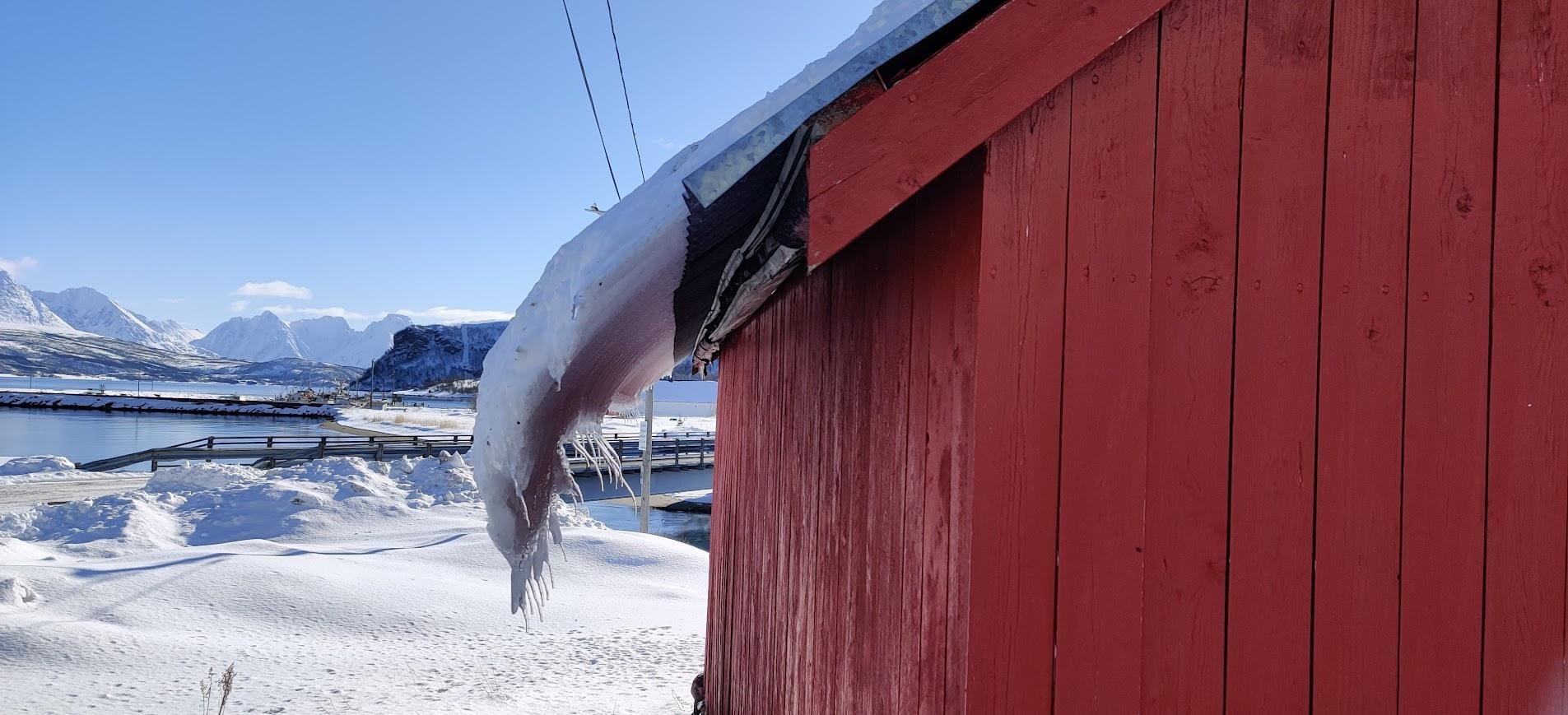
Snow sliding off the roof can help reduce load, but creates hazards for pedestrians, cars, entrances, and lower roofs. Cities may temporarily close streets or parts of the streets to manage this risk. Snow guards and rails help mitigate avalanches, though they also alter how snow accumulates.
Structural Capacity: How Much Can a Building Handle?
A roof’s ability to carry snow depends on its age, structural system (steel, timber, concrete, trusses), roof type (flat, pitched, curved, multi-level), condition of beams and joints, renovation history, and original design snow load and how much weight the roof was originally designed to withstand. Since snow loads are rarely uniform, even a single weak point can become critical while the rest of the roof appears fine.
Monitoring: How Do We Know What’s on the Roof?
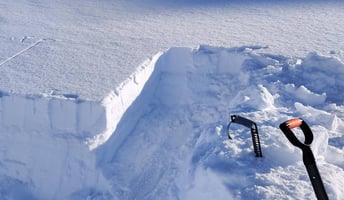
Most buildings still rely on someone physically climbing onto the roof to measure SWE with a sampler—a slow, risky, and imprecise process on large roofs with uneven snow distribution. Automatic monitoring improves safety and reliability. There are devices that monitor the snow weight, such as snow scales. These devices are precise but often come with a high cost and are difficult to install. Modern IoT weather stations such as Snower offer cost-efficient snow monitoring, capabilities to model snow-loads and also provide other meteorological parameters such as temperature and relative humidity.
Snow Removal: When and How Should It Be Done?
Snow removal must be carefully timed and evenly executed. It is often necessary before rain or warm spells, when snowdrift builds up heavily on one side, when SWE rises quickly, or when authorities recommend action. Manual removal remains the most common approach, though it is slow and hazardous. Motorized tools can be used on some flat roofs but require skill and planning.
When heavy snowfall hits, another challenge quickly appears: everyone wants their roofs cleared at the same time. This creates a bottleneck where professional snow-removal crews are fully booked, overtime and weekend work becomes the norm, and costs rise sharply. By monitoring snow loads continuously and understanding when the risk is actually increasing, roof clearing can be scheduled earlier during normal working hours. This is a direct cost reduction method for the maintenance companies and building owners. Multiple buildings in the same area can be handled efficiently before the situation becomes urgent.
Understanding where snow has fallen and how much has accumulated is crucial during major snowfall events.
What Happens in a City During a Heavy Snowfall?
Municipalities and property owners monitor structural loads and forecasts, inspect vulnerable buildings, close streets where roof avalanches may occur, increase snow-removal operations, issue safety notices, and prepare emergency services for potential roof failures or water damage. Snow load is never simply about how much snow fell. It results from the combined effects of wind, roof shape, obstacles, temperature, ice layers, roof's structural age, and how quickly conditions change.
Understanding these factors is essential for keeping people, buildings, and cities safe and manage snow on roofs properly.
Follow us for more!